Luxury & Private Travel
Why an Egyptologist Guide Transforms Your Egypt Trip
What a licensed Egyptologist guide actually adds to an Egypt trip, beyond commentary, and how to tell a genuinely qualified guide from a generalist.
Egypt is one of the few destinations where the difference between a good guide and a mediocre one changes the entire trip, not just a single afternoon. The monuments themselves are static stone, largely uninscribed with helpful signage, and a huge amount of what makes them meaningful, the history, the mythology, the way one temple relates to another, lives in the explanation rather than the site itself. That's what a trained Egyptologist guide is actually being hired for.
What 'Egyptologist Guide' Actually Means
In Egypt, tour guides are licensed by the Ministry of Tourism and Antiquities, and licensing requires a university-level qualification in Egyptology, tourism guidance, or a closely related field, followed by a formal examination. Not every guide who leads tours in Egypt holds this credential in a meaningful way, and standards of depth vary widely even among licensed guides. An Egyptologist guide, in the fullest sense, has studied the subject academically: hieroglyphic reading ability, knowledge of dynastic chronology, familiarity with excavation history, and an understanding of how interpretations of a site have changed as new evidence emerged. That's a different skill set from someone who has memorized a standard script for the Giza plateau or the Karnak hypostyle hall.
Context You Can't Get From a Guidebook or Plaque
Most major Egyptian sites have minimal on-site signage, and what does exist is often brief or dated. A knowledgeable guide fills that gap in ways that go well beyond dates and names:
- Reading cartouches and inscriptions on the spot, so a scene on a temple wall becomes a specific narrative rather than generic decoration.
- Explaining religious and symbolic logic, such as why certain gods appear together, or why a pharaoh's afterlife imagery differs from a temple built for public worship.
- Placing a single site within a wider chronology, connecting what you're seeing at Karnak to what you saw the day before at the Egyptian Museum or will see later at the Valley of the Kings.
- Noting where restoration, reconstruction or academic debate is relevant, rather than presenting every claim as settled fact.
Pacing and Access Most Visitors Don't Get Right
A guide with real experience on the ground also solves logistical problems that have nothing to do with history:
- Knowing which tombs in the Valley of the Kings are open on a given day, since access rotates to protect the paintings, and which are worth the extra ticket.
- Timing visits around cruise ship groups and tour bus schedules so you're not queueing behind fifty people at a tomb entrance.
- Recognizing when a site is better visited at opening, at closing, or mid-afternoon based on light, heat and crowd patterns, not a fixed itinerary template.
- Handling ticket counters, site police, and the informal negotiations that come up around photography permits or additional access.
None of this shows up in a description of "included: licensed guide," but it's a large part of why a well-run private tour feels unhurried while a poorly run one feels like a scramble between stops.
Independent Visit vs Generalist Guide vs Egyptologist Guide
| Independent visit | Generalist guide | Egyptologist guide | |
|---|---|---|---|
| Site navigation | Self-managed, can be confusing at large sites | Handled | Handled |
| Historical depth | Limited to signage and guidebooks | Basic facts, general script | Academic depth, can answer follow-up questions |
| Reading inscriptions | Not possible | Rarely | Often, depending on the guide |
| Adjusting pace and order | Full control, but no local knowledge of crowds | Fixed to a standard route | Adapts route to crowds, light, your interests |
| Answering unusual questions | No one to ask | Often deflects or generalizes | Can engage with specifics and debate |
An independent visit still has its place, particularly for travellers who prefer to read in advance and explore at their own pace. But at sites as dense with detail as Karnak, Luxor's West Bank, or the Egyptian Museum's older galleries, most visitors leave without noticing far more than they saw.
Is a Guided Tour Actually Worth It?
For most first-time visitors to Egypt, yes, and the reasoning is fairly simple. The sites reward context far more than most destinations do; a Roman ruin or a European cathedral often communicates something of its purpose through form alone, but a New Kingdom tomb wall or a Ptolemaic temple relief usually doesn't, unless someone explains the mythology and narrative behind it. Combine that with logistics that are genuinely easier to manage with local support, ticketing, timing, transport between sites, and the case for a private guide becomes practical rather than just a nice-to-have.
The exception is travellers who have already done deep independent reading and specifically want unstructured time at a smaller number of sites. Even then, many choose to hire a guide selectively for the most demanding sites, such as the Valley of the Kings or the Egyptian Museum, and go independently elsewhere.
What to Ask Before Booking a Guide
A few direct questions help separate genuinely qualified guides from those with a license but limited depth:
- What did you study, and where? A degree in Egyptology, tourism guidance or archaeology is a reasonable baseline.
- Can you read hieroglyphs, even at a basic level? Many strong guides can identify names, titles and common phrases on the spot.
- How do you handle questions outside the standard script, such as ongoing excavation news or academic disagreements about a site?
- Will the same guide stay with us for the whole trip, or does it change by city?
Operators built around private Egypt tour packages will usually answer these questions readily and can match you with a guide whose specialty fits your interests, whether that's Old Kingdom pyramid building, New Kingdom temple religion, or the Greco-Roman period.
Where a Strong Guide Matters Most
Some sites lean more heavily on guiding quality than others:
- The Valley of the Kings, where tomb interiors are covered in dense religious texts and imagery that mean little without explanation of the underworld books they depict.
- Karnak Temple, whose scale and layered construction across many reigns can feel like an undifferentiated maze of columns without someone tracing the building phases.
- The Egyptian Museum and Grand Egyptian Museum, where thousands of objects are displayed with limited individual context.
- Abydos and Dendera, further off the main tourist route, where the mythological programs on the walls are unusually intact and rewarding to have explained in detail.
How This Fits Into a Wider Trip
A strong guide's value compounds across a longer itinerary rather than a single site. Threads introduced in Cairo, a particular pharaoh, a religious concept, a dynasty's politics, get picked up again in Luxor and Aswan, so the trip builds into something coherent rather than a series of disconnected highlights. This is part of why operators structure private tours around a consistent guide traveling with you, rather than swapping guides city to city. You can see how we work for more on how that continuity is arranged, and browse guided Egypt tours built around exactly this approach.
Planning Your Trip Around the Right Guide
If you're weighing guided versus independent travel in Egypt, the honest answer is that the guide matters more here than in most destinations, both for depth of understanding and for the practical logistics of moving between sites efficiently. A well-matched Egyptologist guide, particularly one who travels with you for the full trip rather than a single stop, tends to be the single factor travellers mention most when they say a trip to Egypt exceeded expectations.
Get in touch to talk through your interests and dates, and we'll match you with a guide whose background fits the trip you actually want to take.
Group Egyptologist Guides vs Private Egyptologist Guides
Even among genuinely qualified guides, the format of the tour changes how much depth you get. On a group tour, an Egyptologist guide is speaking to fifteen or thirty people with different levels of interest, so explanations stay general and there's little room for follow-up questions or lingering at a wall relief that catches your attention. A private guide can read the room, literally, spending extra time where you're curious and moving quickly past sections that don't interest you.
This also affects pacing decisions that matter in Egypt's climate: a private guide can shift a Valley of the Kings visit earlier to beat both the heat and the crowds, while a group tour is locked into a bus schedule shared with other travellers. If your goal is a trip built around learning rather than simply checking sites off a list, the private format tends to matter as much as the guide's qualifications themselves.
Common Misconceptions About Guiding in Egypt
A few assumptions trip up first-time visitors when they're deciding how much to invest in a guide:
- "A guide is only useful for translation." Most site signage in Egypt is already in English and Arabic, so translation is rarely the main value; interpretation of meaning and context is.
- "All licensed guides know the same amount." Licensing sets a floor, not a ceiling. Depth of knowledge, specialty period, and communication style vary considerably between individuals.
- "A guidebook covers what a guide would tell me." Guidebooks are necessarily general and can't adapt to what's actually in front of you on a specific wall or in a specific chamber, or answer a question you didn't know to look up in advance.
- "Guiding quality doesn't matter much for a short trip." If anything, it matters more on a short trip, since there's less room to recover time lost to confusion, mistimed visits, or a guide who can't hold your attention.
Cairo and the Pyramids City Break
Four focused days across Giza, Saqqara and Dahshur, with the Grand Egyptian Museum and historic Cairo — ideal if your time in Egypt is short.
Frequently asked questions
What is the difference between a licensed guide and an Egyptologist guide in Egypt?+
All guides working legally in Egypt hold a government license, which requires a qualification in Egyptology, tourism guidance or a related field plus an exam. In practice, depth varies widely: some licensed guides work from a standard script, while others have strong academic backgrounds and can read inscriptions, discuss chronology in detail, and engage with questions beyond the basics.
Is hiring an Egyptologist guide worth the extra cost?+
For most first-time visitors, yes. Egyptian sites generally have minimal on-site signage, and the historical and religious context that makes a temple or tomb meaningful usually has to come from a guide rather than the site itself. A good guide also manages timing, tickets and access, which matters at busy sites like the Valley of the Kings.
Can an Egyptologist guide read hieroglyphs?+
Many can, at least well enough to identify royal names, titles and common phrases on temple and tomb walls in real time. This ability varies by guide and isn't guaranteed by licensing alone, so it's a reasonable question to ask directly before booking.
Should I use the same guide for my whole Egypt trip?+
Where possible, yes. A guide who travels with you from Cairo through Luxor and Aswan can build on topics introduced earlier in the trip, so the itinerary feels connected rather than a series of separate briefings from different people at each stop.
Which Egypt sites benefit most from a knowledgeable guide?+
The Valley of the Kings, Karnak Temple, the Egyptian Museum and Grand Egyptian Museum, and less-visited temples like Abydos and Dendera all reward strong guiding, since their value lies heavily in dense religious and historical detail that isn't explained on-site.
What should I ask a guide before booking a private Egypt tour?+
Ask about their academic background, whether they can read hieroglyphs, how they handle questions outside a standard script, and whether the same guide stays with you for the entire trip rather than changing by city.
Experience Egypt like never before
Our local experts are ready to craft a personalized itinerary that matches your dreams. Chat with us now or start designing your trip online.

Planning this trip?
Tell us your dates and interests and our team in Egypt will send a day-by-day plan with clear pricing.
Featured Tours for you
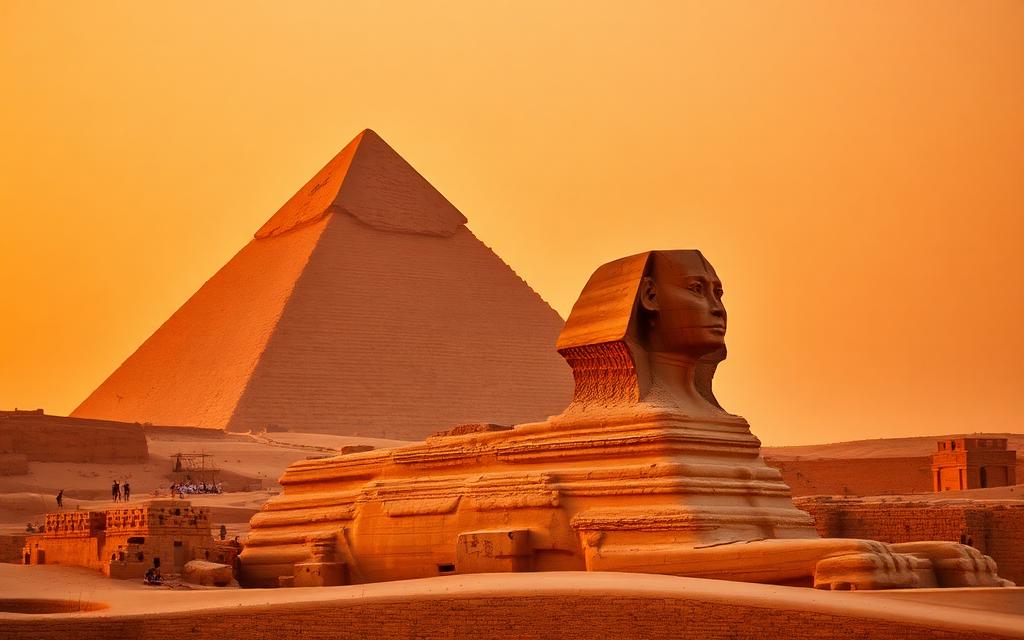
Cairo and the Pyramids City Break
Four focused days across Giza, Saqqara and Dahshur, with the Grand Egyptian Museum and historic Cairo — ideal if your time in Egypt is short.
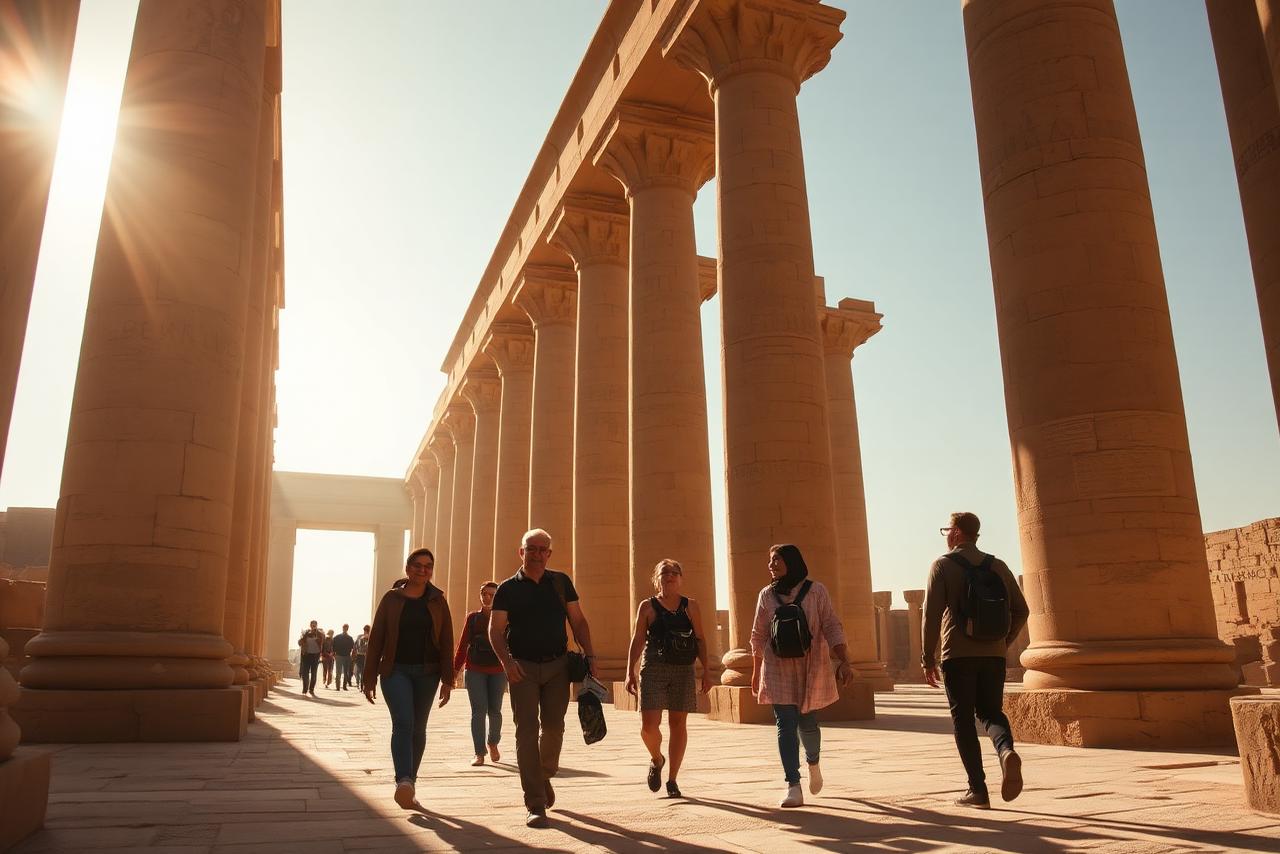
Egypt for Solo Travellers
A small-group departure with no single supplement, covering Cairo, a Nile cruise and Abu Simbel with a dedicated tour leader.
Related guides
Best Egypt Tour Companies: How to Choose in 2026
A buyer's guide to choosing an Egypt tour operator: licensing, guide qualifications, group size, inclusions, payment safety and red flags to watch for.
Egypt Private Tour Packages: Tailored for Every Traveler
A practical guide to how private Egypt tour packages work, what they include, and how to build one around the way you actually want to travel.
Sailing Egypt in Style: Modern Luxury Nile River Cruises
An unhurried look at what luxury sailing on the Nile actually feels like day to day, from private guiding and cabin choice to the quiet hours between temples.