Luxury & Private Travel
Best Egypt Tour Companies: How to Choose in 2026
A buyer's guide to choosing an Egypt tour operator: licensing, guide qualifications, group size, inclusions, payment safety and red flags to watch for.
Choosing who runs your Egypt trip matters more than almost any other single decision you'll make while planning it. The monuments don't change from one operator to the next, but nearly everything about how you experience them, ticket queues, guide quality, what happens if a flight is cancelled, whether your driver shows up, does. This guide sets out the practical criteria worth checking before you commit, without naming or ranking specific companies, so you can evaluate any operator you're considering on your own terms.
Start With Licensing, Not Marketing
Egypt's tourism sector is formally regulated. Legitimate inbound tour operators are licensed by the Egyptian Ministry of Tourism and Antiquities, and tour guides are separately licensed by the same authority after completing a recognised course of study in Egyptology, history and at least one foreign language. This matters practically, not just legally:
- A licensed operator can be held accountable through a known regulatory channel if something goes seriously wrong.
- Licensed guides have passed a formal qualification process, rather than simply speaking your language and knowing the site from repetition.
- Unlicensed "guides" who approach travellers directly at site entrances are not vetted, are not permitted to lead groups inside most monuments, and are a common source of poor experiences and disputes over money.
A reputable operator will state its registration status plainly if asked, and will be able to name the licensing body without hesitation. Vague or defensive answers to a direct question about licensing are a signal worth taking seriously.
Ask About Guide Qualifications Specifically
Not all licensed guides are equally strong, and the guide is the single biggest variable in how much you get out of any day of touring. Worth asking directly:
- Is the guide an Egyptologist by training, with a university-level qualification in the subject, or a general tourism guide who covers multiple types of tour?
- Will you have the same guide for the whole trip, or a different one in each city? Both models are normal, but you should know which applies so you can judge continuity.
- How many years has the guide been working, and do they focus on private touring or large group work? The pacing and depth of explanation differ considerably between the two.
- Can the guide adapt content to your specific interests, or is the commentary a fixed script regardless of who's listening?
A confident operator will happily discuss its guides' backgrounds. One that treats guides as interchangeable, or can't describe how guides are assigned to travellers, is telling you something about how the rest of the trip will be run.
Understand Group Size and What It Does to Your Day
Group size affects pacing, access and the depth of what you'll actually absorb at each site, independent of price:
| Format | What it means in practice |
|---|---|
| Large coach groups (20+) | Fixed schedule, shared pace, general commentary, least flexibility on timing |
| Small group tours (6-12) | More manageable pace, still shared timing and interests with strangers |
| Private touring (your party only) | Vehicle, guide and schedule dedicated entirely to you, full flexibility on pace and depth |
None of these formats is inherently wrong, a well-run small group tour can be excellent value, but you should know exactly which one you're booking. Some marketing describes tours as "private" or "exclusive" when what's actually being sold is a shared coach with a smaller headcount. Ask directly: will any other travellers outside my own party be in my vehicle or with my guide on any day of this trip?
Read the Inclusions Line by Line
"All-inclusive" and "package" are used loosely across the industry, and two quotes at similar headline prices can cover very different things. Before comparing prices between operators, get a written breakdown covering:
- Which site entrance tickets are included, and which (Great Pyramid interior, Tutankhamun's tomb, Seti I's tomb, special access) are optional extras.
- Whether a private guide and driver are included for every touring day, or only some days, with a driver-only arrangement on others.
- Which meals are included beyond breakfast, and whether drinks are covered.
- Whether domestic flights between Cairo, Luxor and Aswan are included or quoted separately.
- What happens to the cost if a site is closed unexpectedly on your date, whether the itinerary is rerouted at no charge or you lose that portion of the trip.
- Cancellation and rescheduling terms, particularly for components booked well in advance such as cruise cabins and domestic flights.
A transparent operator will provide this breakdown without pushing back. Reluctance to itemise what's included, or a quote that only ever gets more expensive once you ask follow-up questions, is worth treating as a warning sign rather than normal negotiation.
Payment Safety: What's Reasonable and What Isn't
How a company asks you to pay tells you a good deal about how it operates. Reasonable practice generally looks like:
- A deposit to confirm the booking, with the balance due closer to travel, paid through a traceable method such as a bank transfer to a company account or a card payment through a proper payment processor.
- Clear, written confirmation of what the deposit and balance each cover.
- A cancellation policy set out in writing before you pay anything.
Signals worth treating with caution:
- Requests to pay the full amount, or a large share of it, only in cash, in person, or to a personal (rather than business) account.
- Pressure to pay quickly to "lock in" a price, especially combined with reluctance to put the itinerary and inclusions in writing first.
- No formal booking confirmation or invoice once you've paid a deposit.
- A company with no verifiable business registration, address or consistent contact details across its communications.
None of this is about assuming bad faith by default. It's about applying the same basic diligence you'd use for any significant purchase made largely on trust, since you're often paying before you've met anyone from the company in person.
Red Flags Worth Taking Seriously
A handful of patterns tend to correlate with poor experiences, independent of price point:
- Itineraries that look identical regardless of your questions. If every enquiry gets the same fixed packaged answer with no attempt to adjust for your interests, dates or group composition, the operator likely isn't set up for genuine customisation, whatever the marketing says.
- Unwillingness to name the specific hotels or cruise vessel before booking. Reputable operators can tell you exactly where you'll stay, not just a category or star rating.
- No willingness to discuss guide qualifications. As covered above, this is one of the most revealing questions you can ask.
- Reviews that all read as suspiciously uniform or overly generic. Genuine traveller feedback tends to mention specific guides, specific days, specific small frustrations and fixes, not just enthusiastic but vague praise.
- A rush to close the sale before answering basic questions. A well-run operator with a healthy pipeline of business doesn't need to pressure you into a same-day decision on a trip you'll take months later.
- No clear point of contact once you're on the ground in Egypt. Ask before booking exactly who you'd call, and how quickly, if a flight changes or a guide doesn't show up.
Questions Worth Asking Before You Book
A short, direct list to work through with any operator you're seriously considering:
- Are you and your guides licensed by the Ministry of Tourism and Antiquities?
- Will my tour be genuinely private, or shared with other travellers outside my party?
- Can you give me a full written breakdown of what's included and what's optional?
- What happens if a site is closed or a flight is delayed or cancelled on my dates?
- How and when do you expect payment, and what does the cancellation policy say in writing?
- Can you name the specific hotels and, if relevant, the cruise vessel before I confirm?
- Who is my point of contact in Egypt during the trip itself, and how do I reach them?
An operator that answers all seven clearly and without friction has already told you most of what you need to know.
Weighing Price Against What You're Actually Buying
The cheapest quote and the most expensive one on the same-looking itinerary are rarely selling the same product once you dig into guide licensing, group size, ticket inclusions and payment terms. It's entirely reasonable to compare prices, but compare them against a matched, itemised breakdown rather than a headline number, since the gap in price is usually explained by exactly the criteria set out above, not by one company simply marking things up.
Bringing It Together
Choosing an Egypt tour operator well comes down to a short list of concrete checks rather than instinct or marketing polish: verified licensing for the company and its guides, clarity on whether your tour is genuinely private, a full written breakdown of inclusions, sensible and traceable payment terms, and straight answers to direct questions. Any operator confident in what it offers will welcome those questions rather than deflect them.
If you'd like to see how we handle each of these points directly, our page on why travellers choose Kemet Tour sets out our licensing, guiding approach and inclusions in detail, and you're welcome to put the same questions to us that you'd put to anyone else. For a closer look at how private itineraries are actually built once you've chosen an operator, see private Egypt tour packages, and for more on what a strong guide adds to the trip itself, see licensed Egyptologist guides. You can also browse our Egypt tours directly to see how a fully itemised itinerary looks in practice.
Egypt for Solo Travellers
A small-group departure with no single supplement, covering Cairo, a Nile cruise and Abu Simbel with a dedicated tour leader.
Frequently asked questions
Do Egypt tour operators need to be licensed?+
Yes. Legitimate inbound operators are licensed by the Ministry of Tourism and Antiquities, and tour guides hold a separate license after completing formal training in Egyptology and language study. Asking a company directly about its licensing, and its guides' licensing, is a reasonable and useful first check.
What's the difference between a small group tour and a private tour?+
A small group tour still shares a vehicle, guide and schedule with other travellers, just fewer of them. A genuinely private tour dedicates the guide, driver and pace to your own party only. Some marketing blurs this distinction, so it's worth asking directly whether anyone outside your party will share your vehicle or guide.
Is it normal to pay a deposit before an Egypt trip?+
Yes, a deposit against a written booking confirmation, paid through a traceable method such as a bank transfer or card payment, is standard practice. What's worth avoiding is pressure to pay the full amount in cash, to a personal account, or without a clear written record of what you're paying for.
How can I tell if an Egypt tour itinerary is genuinely customised?+
A customised itinerary should reflect your actual questions and interests back to you, not arrive as an identical template regardless of what you asked. Operators who can name specific hotels, adjust pacing for your group, and explain guide assignment in detail are generally building the trip around you rather than fitting you into a fixed product.
What should I do if a tour operator won't itemise what's included?+
Treat it as a signal to keep comparing. A written, line-by-line breakdown of tickets, meals, guiding, transport and flights should be available on request before you pay anything, and reluctance to provide one makes it hard to compare that quote fairly against others.
Experience Egypt like never before
Our local experts are ready to craft a personalized itinerary that matches your dreams. Chat with us now or start designing your trip online.

Planning this trip?
Tell us your dates and interests and our team in Egypt will send a day-by-day plan with clear pricing.
Featured Tours for you
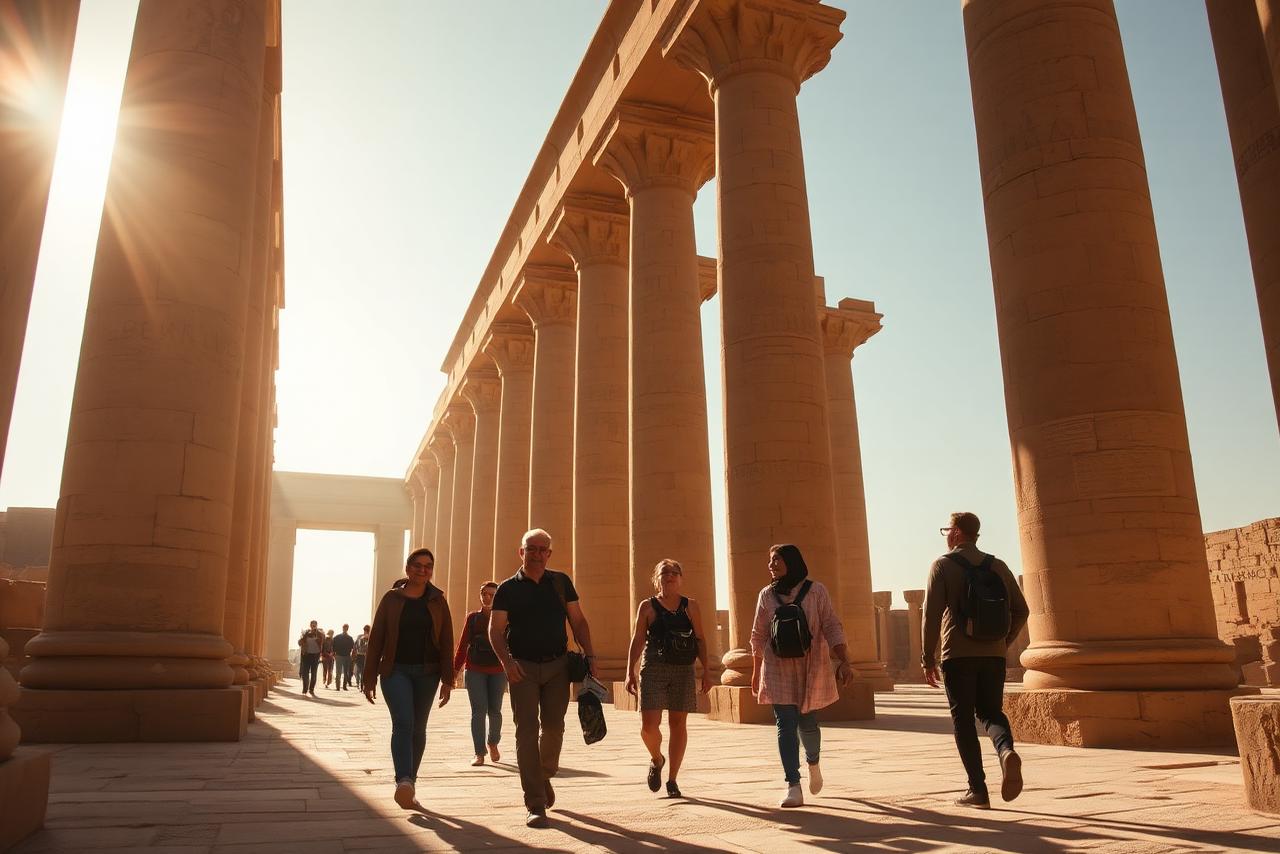
Egypt for Solo Travellers
A small-group departure with no single supplement, covering Cairo, a Nile cruise and Abu Simbel with a dedicated tour leader.

Egypt Budget Explorer
All the essentials of Cairo, Luxor and Aswan at a lower price point, using comfortable 3-star hotels and overnight trains.
Related guides
Egypt Private Tour Packages: Tailored for Every Traveler
A practical guide to how private Egypt tour packages work, what they include, and how to build one around the way you actually want to travel.
Sailing Egypt in Style: Modern Luxury Nile River Cruises
An unhurried look at what luxury sailing on the Nile actually feels like day to day, from private guiding and cabin choice to the quiet hours between temples.
Solo Luxury Travel in Egypt: Safety, Style & Freedom
A practical guide to travelling solo in Egypt: safety realities, the single supplement, and how private guiding changes the trip.