
Egyptian History & Sites
Karnak Temple: Exploring Egypt's Greatest Temple Complex
A practical guide to Karnak Temple's Hypostyle Hall, obelisks and sacred lake, plus how it compares with Luxor Temple.
Karnak is not one temple but an entire religious city built up over two thousand years, and walking through its gates for the first time is one of the few experiences in Egypt that genuinely exceeds expectation. Successive pharaohs added halls, pylons, obelisks and shrines to this site dedicated primarily to the god Amun, and the result is the largest religious complex ever built anywhere in the ancient world, still standing on the edge of modern Luxor. No single photograph or description quite prepares you for the scale of the Hypostyle Hall or the sheer accumulated weight of history stacked into one site.
A brief orientation
Karnak sprawls across more than a hundred hectares, though most visitors focus on the Precinct of Amun-Re, the core temple area open to the public. Within it, several features stand out immediately even to visitors with no background in Egyptology: the avenue of ram-headed sphinxes at the entrance, the towering first pylon, and beyond it the forest of columns that makes up the Hypostyle Hall.
The Great Hypostyle Hall
This is Karnak's single most overwhelming space: 134 massive stone columns arranged in sixteen rows, some over twenty metres tall, originally supporting a roof and filling the hall with shafts of light through clerestory windows. Every surface is carved with reliefs, and enough original paint survives in sheltered corners to hint at how vivid the whole hall once looked. Most visitors spend far longer here than they expect to, simply because there is so much to take in at close range.
Obelisks and open courts
Karnak holds several standing obelisks, including one raised by Hatshepsut that remains the tallest surviving obelisk in Egypt, and the open courts between pylons give a sense of how the complex grew outward over successive reigns rather than being built to a single plan. Look for the different building styles and cartouches as you move deeper into the site; the ability to spot which pharaoh added which section is one of the more satisfying skills a good guide will teach you over the course of a visit.
The sacred lake and museum
Behind the main temple axis sits the sacred lake, used for ritual purification in antiquity and now a quiet, reflective spot away from the busier halls. Nearby, the open-air museum displays blocks and statuary recovered during restoration work, including pieces from smaller shrines that were later dismantled and reused as building material in later structures, a common practice in ancient Egyptian construction.
Karnak vs Luxor Temple
Visitors often ask whether Karnak or the smaller, more central Luxor Temple deserves priority, and the honest answer is both, for different reasons.
| Feature | Karnak Temple | Luxor Temple |
|---|---|---|
| Scale | Vast, multiple precincts | Smaller, single axis |
| Best time to visit | Early morning | Evening, when lit |
| Standout feature | Hypostyle Hall | Colonnade and pylon reliefs |
| Typical visit length | 2-3 hours | 1-1.5 hours |
| Atmosphere | Monumental, layered history | Intimate, atmospheric at night |
Most itineraries pair a morning at Karnak with an evening visit to Luxor Temple, when it is illuminated and considerably cooler.
The sound and light show
Karnak hosts an evening sound and light show that narrates the temple's history using illuminated walkways through the site after dark. It divides opinion among seasoned travellers, some find it atmospheric, others prefer the temple in silence, but it is worth knowing about as an option, particularly if you are visiting with family members who might appreciate the more theatrical, narrative-led introduction to the site.
Practical tips for visiting
- Go early. The site opens shortly after sunrise and the first hour offers both cooler temperatures and considerably smaller crowds.
- Wear a hat and sun protection. There is very little shade across the open courts, and the stone reflects heat strongly by mid-morning.
- Bring a guide or a good reference. Karnak's layout, built up over two millennia, is genuinely confusing without context, and a guide will help you understand which sections belong to which era.
- Allow at least two hours. Rushing Karnak in under an hour means missing entire precincts most visitors do not realise exist beyond the main axis.
Combining Karnak with the rest of Luxor
Karnak sits on the east bank, opposite the royal tombs and mortuary temples of the west bank, and most well-planned Luxor days separate the two rather than attempting both in one exhausting stretch. A typical structure pairs a morning at the Valley of the Kings with an afternoon at Karnak, or vice versa, with a break at midday to avoid the worst of the heat. Many Nile cruise itineraries build a stop here into the schedule automatically, since cruises that visit Karnak typically dock in Luxor for a full day or more.
Why context matters here more than almost anywhere
Karnak rewards background knowledge more than almost any other site in Egypt, precisely because it was built and rebuilt over two thousand years rather than in one coherent phase. Understanding why a chapel was demolished, why an obelisk was later hidden behind a wall by a jealous successor, or why certain cartouches were deliberately chiseled out after a pharaoh fell from favour turns a walk through impressive ruins into a genuinely gripping historical narrative. This is exactly the kind of depth Egyptologist guides are trained to bring out, and it is difficult to replicate from a guidebook alone while standing in the heat trying to match hieroglyphs to a printed map.
Closing thoughts
Karnak is one of the few sites in Egypt that genuinely needs unhurried time and good context to make sense of its scale and history. If you would like Karnak built into a properly paced Luxor itinerary, with the right guide and the right time of day, our team can help design that around the rest of your trip.
The Precincts Beyond the Main Axis
Most visitors experience Karnak as a single processional route through the Precinct of Amun-Re, but the wider complex actually includes two further precincts rarely visited by casual tourists: the Precinct of Mut, dedicated to Amun's consort, and the Precinct of Montu, an earlier war-god cult centre largely unexcavated and closed to general visitors. The Precinct of Mut, connected historically to the main temple by its own avenue of sphinxes, holds a sacred lake of its own and a scattering of statues, including numerous representations of the lioness goddess Sekhmet, though much of it remains under active excavation and is only partially accessible. Knowing these precincts exist, even if your visit focuses on the main axis, helps make sense of just how large a religious complex this was in antiquity, extending well beyond what a typical two-hour visit covers.
Reading the Pylons as a Historical Timeline
Karnak's ten pylons, the monumental gateways that punctuate the site's main axis, were not built in a single campaign but added successively over centuries by different pharaohs, each seeking to leave a mark on Egypt's most important religious site. Walking from the first pylon at the entrance toward the inner sanctuary is, in a real sense, walking backward through the temple's construction history, since later pharaohs generally built new pylons and courts in front of the existing structure rather than replacing it. A guide who can identify which pylon belongs to which dynasty, and explain why certain rulers were so eager to associate themselves with this particular temple, turns what looks like a repeating sequence of stone gateways into a fairly literal architectural record of two thousand years of Egyptian political history.
The Avenue of Sphinxes and Its Recent Restoration
The ram-headed sphinxes lining Karnak's entrance once formed part of a much longer avenue of human-headed sphinxes that connected the temple directly to Luxor Temple nearly three kilometres away, a route used for the annual Opet Festival procession. Large sections of this avenue, buried and built over for centuries, have been excavated and restored in recent years, and it's now possible in principle to trace something close to the original processional route between the two temples, though most visitors still experience Karnak and Luxor Temple as separate stops rather than walking the connecting avenue itself. Knowing this route existed adds useful context to why Karnak and Luxor Temple were never really separate religious sites, but two ends of a single ceremonial complex.
Karnak's Role in the Opet Festival
Much of what looks purely architectural at Karnak, the scale of the courts, the width of the processional way, the alignment of the pylons, was built with a specific annual ceremony in mind. During the Opet Festival, statues of Amun, Mut and their son Khonsu were carried in ceremonial barques from Karnak to Luxor Temple and back, an event that appears to have functioned as a significant renewal ritual for the reigning pharaoh's authority, drawing large public participation. Understanding that Karnak was built as much for a specific moving ceremony as for daily ritual use changes how the site's layout reads: the long avenues and successive courts were designed to be processed through, not simply admired from a fixed viewing point.
Conservation Work You Can See On Site
Active conservation is visible at various points around Karnak, from scaffolding around specific columns undergoing cleaning or structural stabilisation, to areas roped off for ongoing excavation. This is normal and expected at a site of this scale and age rather than a sign of neglect; Egyptian and international teams have worked at Karnak for well over a century, and portions of the site look meaningfully different today than they did even a decade ago as restoration and re-erection projects continue, including work to re-raise fallen columns and reassemble scattered blocks identified as belonging to specific structures. A guide familiar with current conservation projects can point out what's recently changed, which adds a sense of the site as an ongoing, living area of study rather than a fixed museum piece.
Visiting Karnak With Limited Mobility
Karnak's main precinct involves flat but sometimes uneven stone paving, long distances between the entrance and the inner sanctuary, and very little shade across the open courts. Visitors with mobility limitations can generally manage the Hypostyle Hall and the first several courts without excessive difficulty, since the surfaces there are relatively even, though the full length of the site from entrance to the rear precincts represents a substantial walk. Discussing pacing and rest points with your guide in advance, and considering a shorter, more targeted visit focused on the Hypostyle Hall and the first pylon rather than attempting the entire complex, is a reasonable way to manage this for anyone concerned about distance or heat.
What First-Time Visitors Often Miss
A handful of details are easy to walk past without a guide pointing them out: the deliberately erased cartouches of Hatshepsut, chiselled out by her successor Thutmose III in an act of damnatio memoriae; the small but well-preserved chapel of Philip Arrhidaeus, Alexander the Great's half-brother, tucked behind the main sanctuary and often overlooked; and the scarab statue near the sacred lake, associated with a local tradition of walking around it a set number of times for good fortune, a popular photo stop with genuine ancient religious roots behind the modern custom. None of these require extra time to see, but all require knowing to look for them.
Cairo and the Pyramids City Break
Four focused days across Giza, Saqqara and Dahshur, with the Grand Egyptian Museum and historic Cairo — ideal if your time in Egypt is short.
Frequently asked questions
How long does it take to visit Karnak Temple?+
Most visitors need two to three hours to see the main precinct properly, including the Hypostyle Hall, obelisks and sacred lake. Enthusiasts with a strong interest in Egyptology sometimes spend half a day exploring further sections.
Is Karnak or Luxor Temple better to visit?+
They serve different purposes rather than competing directly: Karnak is vast and best seen in the cooler morning hours, while Luxor Temple is smaller and particularly atmospheric when lit in the evening. Most itineraries include both on the same day or on consecutive days.
Is the Karnak sound and light show worth attending?+
It offers a narrated, illuminated walk through the temple after dark and appeals particularly to families or first-time visitors who want a more theatrical introduction. Repeat visitors and those who prefer quiet contemplation often prefer a daytime visit instead.
What is the best time of day to visit Karnak?+
Early morning, shortly after opening, offers the coolest temperatures and the smallest crowds. Late afternoon light is also attractive for photography, though the site is busier at that time.
Do I need a guide to visit Karnak Temple?+
A guide is not required but is strongly recommended, since the site was built and modified over two thousand years and the layout can be confusing without context. A good guide will also point out details, such as erased cartouches and reused blocks, that are easy to miss unguided.
Are Karnak and Luxor Temple connected to each other historically?+
Yes. They were linked by a nearly three-kilometre avenue of sphinxes used during the annual Opet Festival, when statues of the gods were carried in procession between the two temples. Large sections of this avenue have been excavated and restored in recent years.
Experience Egypt like never before
Our local experts are ready to craft a personalized itinerary that matches your dreams. Chat with us now or start designing your trip online.

Planning this trip?
Tell us your dates and interests and our team in Egypt will send a day-by-day plan with clear pricing.
Featured Tours for you
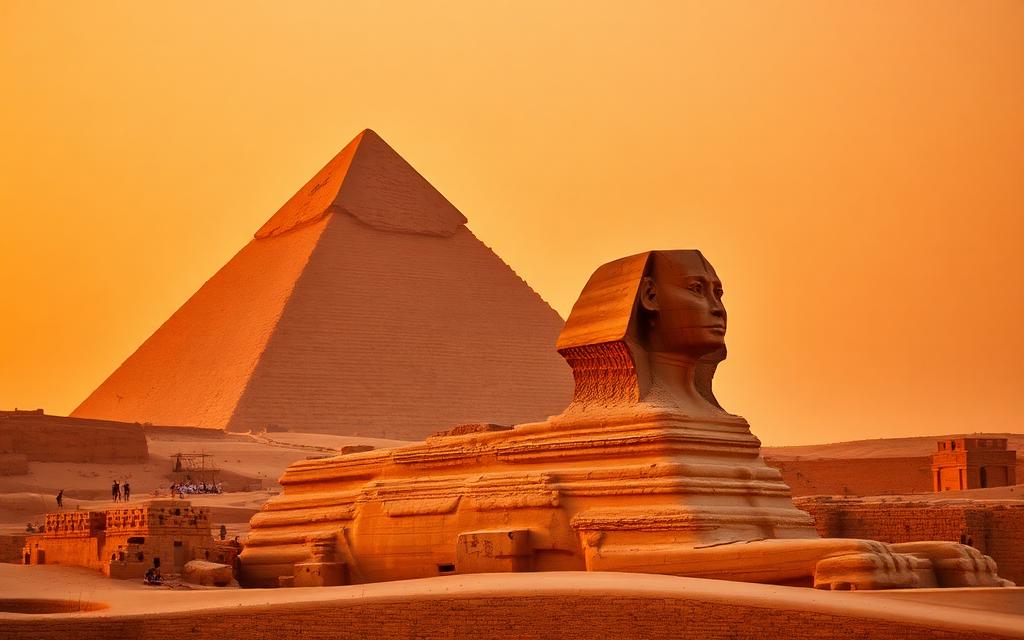
Cairo and the Pyramids City Break
Four focused days across Giza, Saqqara and Dahshur, with the Grand Egyptian Museum and historic Cairo — ideal if your time in Egypt is short.
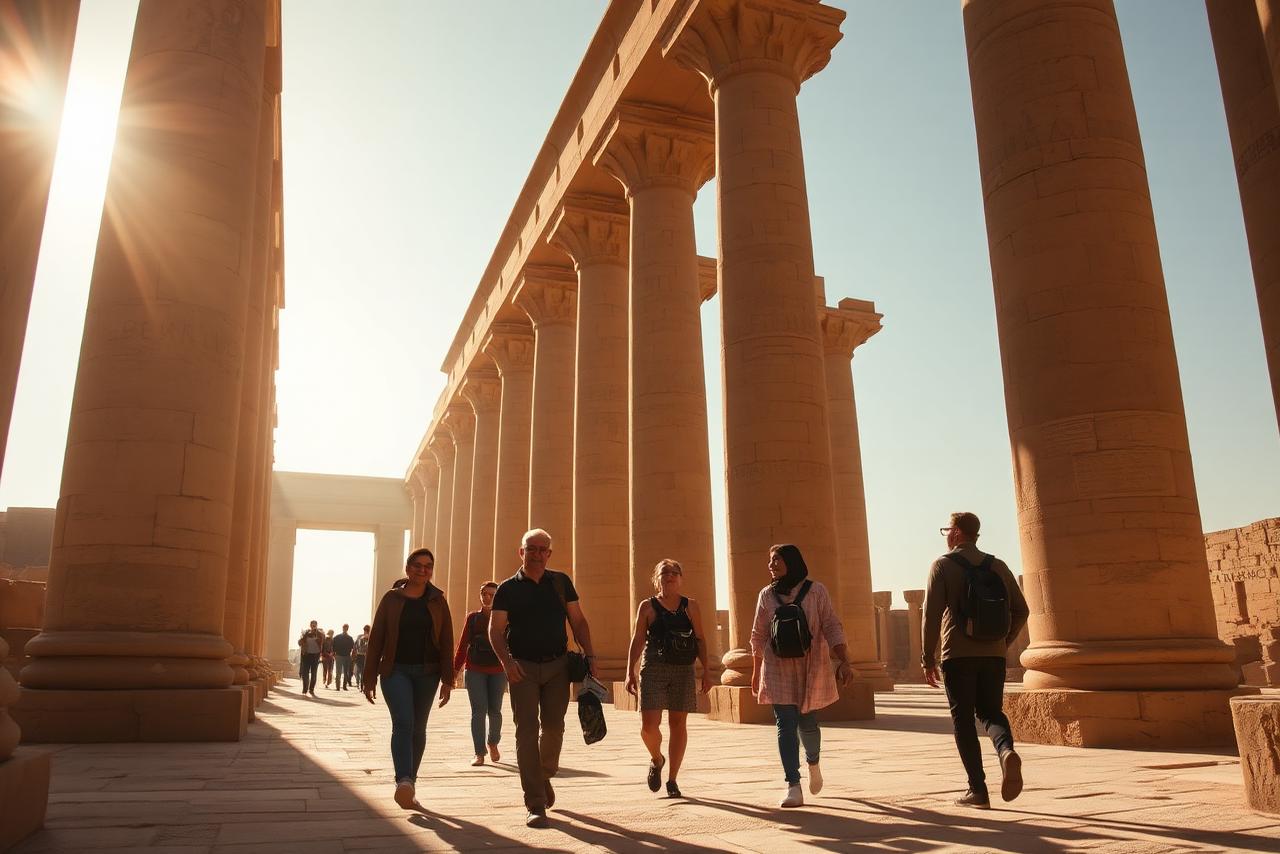
Egypt for Solo Travellers
A small-group departure with no single supplement, covering Cairo, a Nile cruise and Abu Simbel with a dedicated tour leader.
Related guides
Pyramids of Giza Tours: What to Expect & How to Book
The best Pyramids of Giza tours pair a licensed Egyptologist with a private car, cover the three pyramids and the Great Sphinx, and give you the freedom to arrive early before the crowds.
Nile Cruise Planning: Practical Tips for First-Time Travelers
How Nile cruises actually work: routes, ship types, what is included, which temples you see on which day, and how to choose between a cruise ship, a dahabiya and a felucca.
Best Time to Visit Egypt for a Luxury Tour
Month-by-month temperatures, crowd levels and prices for Cairo, Luxor, Aswan and the Red Sea — and why the "best" month depends entirely on how you handle heat.