
Aswan & Nubia
Abu Simbel: Guide to Ramses II's Grand Temples
Everything to know about visiting Abu Simbel: its history, the 1960s relocation, and how to get there from Aswan.
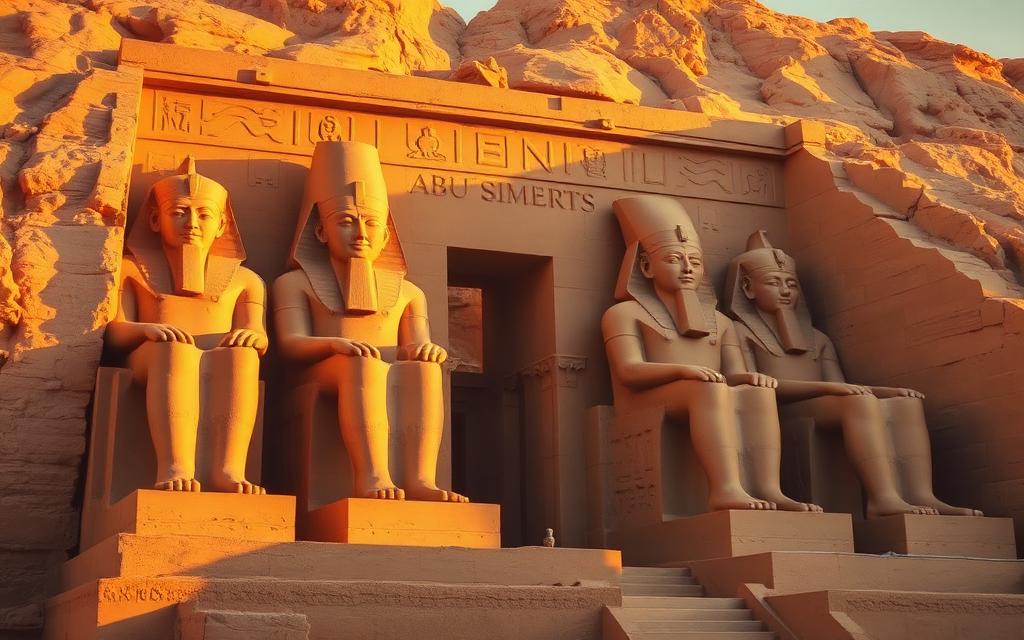
Ramses II built Abu Simbel to be seen from a great distance, and it still works exactly as intended. The two temples cut into a sandstone cliff on the west bank of Lake Nasser, roughly 280 kilometres south of Aswan, remain one of the most striking sights in Egypt, both for the scale of the four seated colossi facing the entrance and for the sheer improbability of the 1960s engineering project that saved the whole complex from the rising waters of the Aswan High Dam.
Why Ramses II Built Abu Simbel
The Great Temple was carved in the thirteenth century BC, during the reign of Ramses II, one of ancient Egypt's longest-ruling and most self-promoting pharaohs. Positioned near Egypt's southern frontier with Nubia, the temple served two purposes at once: it was a statement of royal power aimed at anyone approaching from the south, and a religious monument dedicated to the gods Amun, Ra-Horakhty and Ptah, with Ramses himself depicted as a fourth, deified figure among them. The smaller temple beside it was dedicated to his chief wife, Nefertari, and to the goddess Hathor - one of very few ancient Egyptian temples built in honour of a queen.
What You'll See at the Great Temple
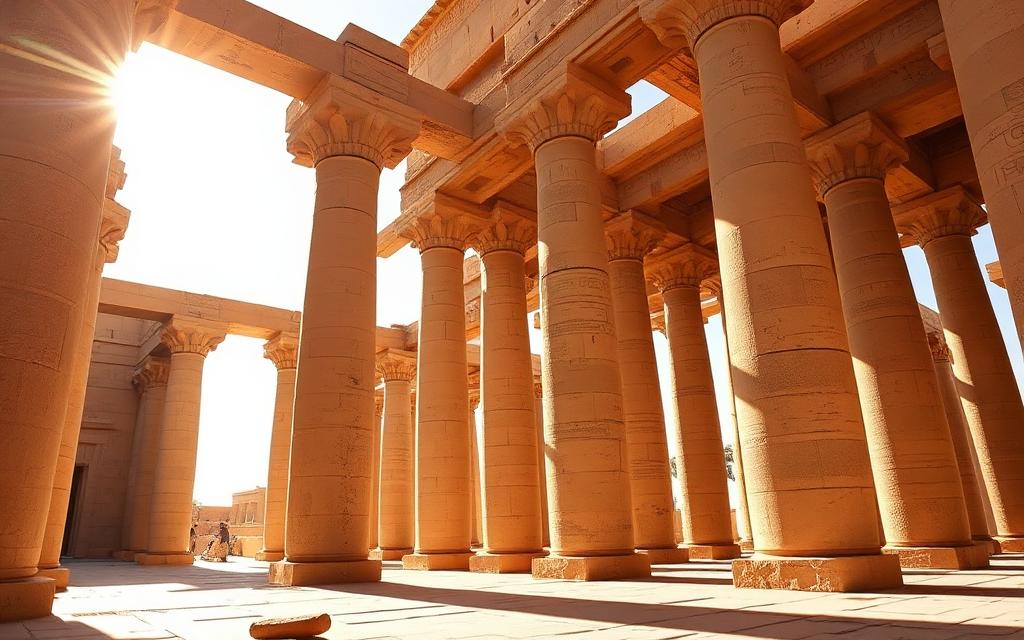
Four seated statues of Ramses II, each around 20 metres tall, guard the entrance. One of the figures lost its upper half in an ancient earthquake, and the fallen fragments were left on the ground during the relocation, exactly as they were found. Inside, a hypostyle hall lined with Osiride pillars leads to an inner sanctuary roughly 60 metres from the entrance, where four seated statues represent the temple's dedicatees.
Twice a year, on or around 22 February and 22 October, sunlight aligns through the temple's axis to illuminate the statues in the inner sanctuary, missing only Ptah, the god associated with the underworld, who traditionally remains in shadow. These dates are believed to mark Ramses II's birthday and coronation, though there is some scholarly debate about the original alignment before the temple was moved.
The Temple of Nefertari
Beside the Great Temple stands the smaller Temple of Hathor, fronted by six standing statues roughly 10 metres tall - four of Ramses and two of Nefertari, an unusual arrangement that reflects her prominent status. Inside, reliefs show Nefertari making offerings to the gods in her own right, rather than only accompanying her husband, which is rare in Egyptian temple decoration of this period.
The Relocation: One of the Twentieth Century's Great Engineering Projects
When the Aswan High Dam was built in the 1960s, the rising waters of what became Lake Nasser threatened to submerge Abu Simbel entirely. Between 1964 and 1968, an international UNESCO-led team cut both temples into more than a thousand blocks, some weighing over 20 tonnes, and reassembled them on higher ground about 65 metres above their original position, rebuilding the cliff face around them to preserve the original orientation as closely as possible. The project remains one of the defining achievements of modern archaeological engineering and is part of why Abu Simbel carries such a strong sense of occasion for visitors today.
How to Get to Abu Simbel
There are two practical ways to reach the site from Aswan:
- By air: A short flight of around 30 minutes from Aswan, usually as an early-morning round trip that allows a few hours at the temples before returning.
- By road: A convoy or private transfer of roughly three to three and a half hours each way across the desert, typically departing very early to avoid the midday heat.
Flying is faster and more comfortable, particularly in summer, while the road option can be arranged privately at your own pace rather than joining a convoy schedule.
Planning Your Visit
| Option | Duration | Best for |
|---|---|---|
| Morning flight from Aswan | Half day | Travellers short on time, or visiting in summer heat |
| Private road transfer | Full day | Travellers who prefer flexibility and don't mind an early start |
| Overnight in Abu Simbel town | 1-2 nights | Photographers and those attending the sun festival dates |
A few practical notes worth knowing before you go:
- The site opens early, and arriving as close to opening time as possible avoids both the heat and the largest tour groups.
- There is limited shade around the temple forecourt, so sun protection matters even in cooler months.
- Photography is generally permitted outside the temples; camera rules inside can change, so check locally on the day.
The Abu Simbel Sun Festival
The twice-yearly alignment dates draw crowds, including local music and cultural events in Abu Simbel town. If you want to witness the sunlight reach the inner sanctuary, plan well ahead, since accommodation and transport in the small town fill up around these two dates each year.
Combining Abu Simbel With the Rest of Your Trip
Most visitors see Abu Simbel as a day trip from Aswan, often as the final stop after exploring the city itself, the Philae temple and the Nubian villages along the river. If you are deciding how to divide your time between the two cities before adding Abu Simbel to the plan, our comparison of Luxor vs Aswan is a useful starting point. For travellers building a longer route through the country, Abu Simbel also fits naturally into a broader plan such as our 10-day Egypt itinerary, usually scheduled toward the end of the Nile Valley portion of the trip.
Abu Simbel in the Wider Nubian Rescue Campaign
Abu Simbel was the most famous rescue, but it was not the only one. The same UNESCO campaign that saved these two temples also relocated more than twenty other Nubian monuments threatened by Lake Nasser, including the Temple of Philae near Aswan and the Temple of Kalabsha. Several smaller temples were gifted to museums abroad in recognition of the countries that funded the effort, including the Temple of Dendur, now reconstructed inside the Metropolitan Museum of Art in New York. Seeing Abu Simbel alongside Philae gives a fuller picture of just how much of ancient Nubia would have been lost permanently without the campaign.
Best Time of Year to Visit
Abu Simbel sits further south than Aswan and can be noticeably hotter, particularly between May and September when midday temperatures regularly climb well above what most visitors find comfortable for standing outside at a temple forecourt. The cooler months from October to April are the more pleasant time to visit, and they also coincide with the two sun festival dates in February and October. Whatever the season, an early start is worthwhile, both for the light and to avoid the hottest part of the day.
What to Bring
A short list of practical items makes a real difference at a site with little shade:
- A hat and high-factor sun protection
- A refillable water bottle, since options for buying water are limited right at the temples
- A camera with a wide lens, since the facade is large and best captured from a slight distance
- Comfortable, closed shoes for the walk from the car park or airport to the temple entrance
A Note on the Approach
However you arrive, the first view of the temple facade is designed to be a surprise. The approach path curves around the cliff so that the four colossi are not visible until you are almost upon them, replicating something close to the effect ancient visitors would have had arriving by boat along the Nile before the lake existed. It's worth resisting the urge to look at photographs on your phone in the final approach and simply let the scale register as you round the corner.
Is Abu Simbel Worth the Trip?
Given the distance from Aswan, it's a fair question. For most travellers interested in ancient Egypt, the answer is yes: the scale of the facade, the history of the relocation, and the relative remoteness of the site compared with the busier temples further north combine to make it one of the more memorable stops on a Nile Valley itinerary, even accounting for the early start it requires.
Guides and Context at the Site
Because Abu Simbel sits in relative isolation compared with the temples clustered around Luxor and Aswan, having an Egyptologist guide on hand adds real value here: the relocation story, the astronomical alignment and the political messaging behind the facade are easy to miss without someone to point them out. Many visitors combine the temple visit with a broader look at Aswan and its Nubian heritage, since the two sites share a common history in the story of the High Dam and the lake it created.
For most visitors, that single afternoon or morning at Abu Simbel becomes one of the defining memories of a Nile Valley trip, worth the early start and the distance from Aswan.
Plan Your Visit With Us
Abu Simbel rewards a bit of planning, whether that means timing your visit around the sun festival or simply choosing between the flight and the road transfer based on your schedule. Our team can arrange either option as part of a wider Aswan itinerary tailored to your dates.
Best of Egypt with Abu Simbel
The classic route at a calmer pace, with the Abu Simbel temples added and extra time in both Cairo and Luxor.
Frequently asked questions
How far is Abu Simbel from Aswan?+
Abu Simbel is roughly 280 kilometres south of Aswan, close to the border with Sudan. It takes about 30 minutes to fly or around three to three and a half hours to drive each way.
Why were the Abu Simbel temples moved?+
The temples were relocated between 1964 and 1968 to save them from the rising waters of Lake Nasser, created by the construction of the Aswan High Dam. An international team cut the temples into blocks and reassembled them on higher ground.
What is the Abu Simbel sun festival?+
Twice a year, around 22 February and 22 October, sunlight aligns through the Great Temple to illuminate the inner sanctuary statues, missing only the god Ptah. These dates are thought to relate to Ramses II's birthday and coronation.
Should I fly or drive to Abu Simbel?+
Flying is faster and more comfortable, particularly in the heat of summer, while driving is more flexible and can be arranged privately rather than in a convoy. Both options are usually done as a day trip from Aswan.
How much time do you need at Abu Simbel?+
Most visitors spend around two hours at the site, which is enough to see both the Great Temple and the Temple of Nefertari at a comfortable pace with a guide.
Experience Egypt like never before
Our local experts are ready to craft a personalized itinerary that matches your dreams. Chat with us now or start designing your trip online.

Planning this trip?
Tell us your dates and interests and our team in Egypt will send a day-by-day plan with clear pricing.
Featured Tours for you
Best of Egypt with Abu Simbel
The classic route at a calmer pace, with the Abu Simbel temples added and extra time in both Cairo and Luxor.
Grand Egypt Discovery
Two weeks covering everything that matters: Cairo, Alexandria, Abu Simbel, a multi-night cruise and Red Sea time at the end.
Related guides
Pyramids of Giza Tours: What to Expect & How to Book
The best Pyramids of Giza tours pair a licensed Egyptologist with a private car, cover the three pyramids and the Great Sphinx, and give you the freedom to arrive early before the crowds.
Nile Cruise Planning: Practical Tips for First-Time Travelers
How Nile cruises actually work: routes, ship types, what is included, which temples you see on which day, and how to choose between a cruise ship, a dahabiya and a felucca.
Best Time to Visit Egypt for a Luxury Tour
Month-by-month temperatures, crowd levels and prices for Cairo, Luxor, Aswan and the Red Sea — and why the "best" month depends entirely on how you handle heat.